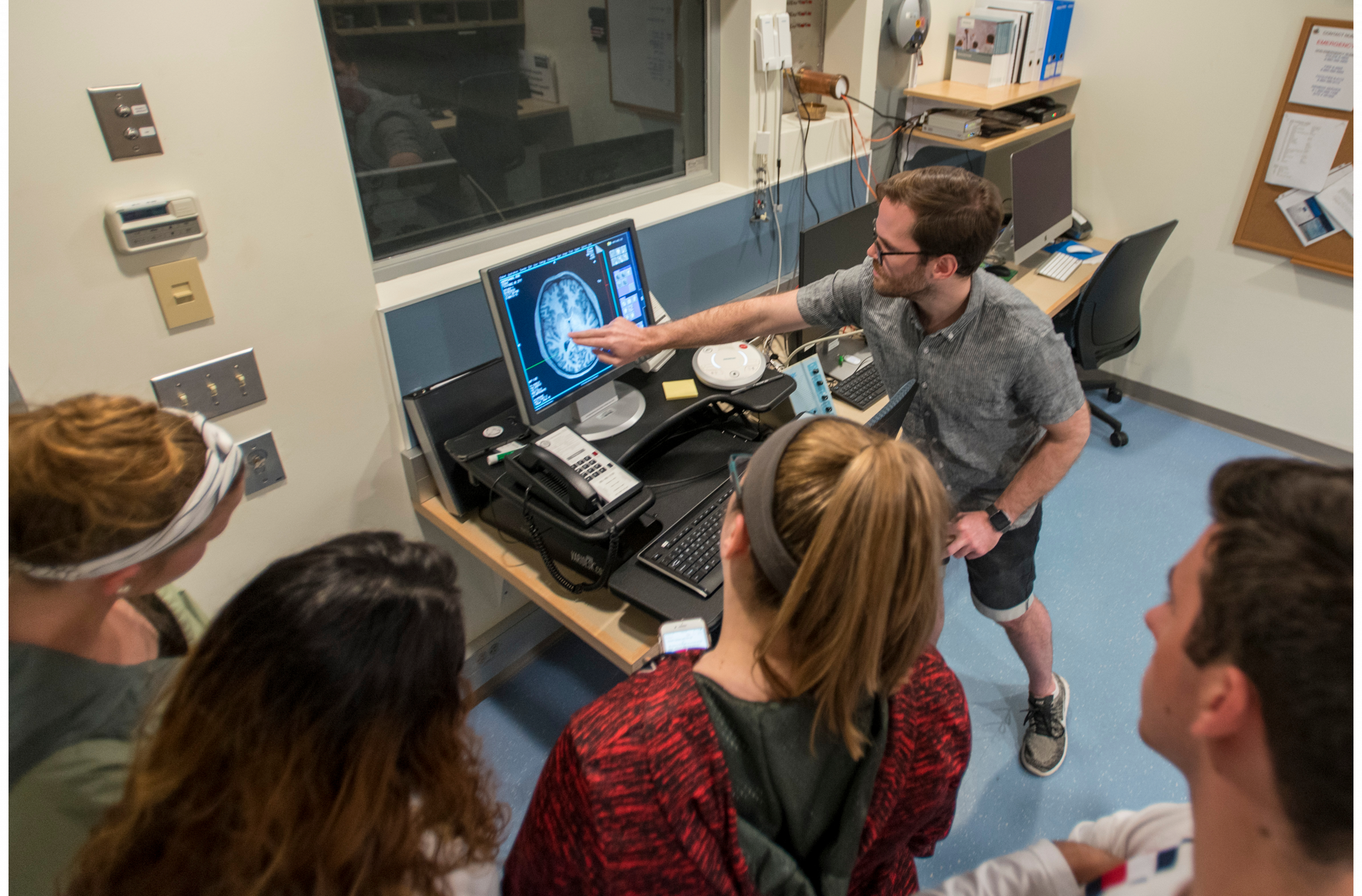
At UConn, we are dedicated to being a leader in neurodiversity innovation and inclusion in the United States. We offer comprehensive support for neurodiverse individuals including personalized academic accommodations, mentoring, and innovative training and curriculum. We offer unique research opportunities, conduct cutting-edge research, and provide workforce development programs.
Programs
Filter by Type:
-
Beyond Access
Beyond Access offers individualized services exceeding standard accommodations to bridge the gap between access and success. In this paid program, strategy instructors promote student growth…
-
brainLENS Lab
The brainLENS Lab focuses on research and programs for neurodiverse/neurodivergent learners. The lab’s work includes basic neuroscience research on dyslexia, translational research on resilience and…
-
Buchweitz Lab
The Buchweitz Lab studies the neural and environmental factors that influence learning to read, particularly among children who are underrepresented. The lab collaborates with multinational…
-
Center for Students with Disabilities
The Center for Students with Disabilities (CSD) engages students in a deliberative process to identify and provide appropriate campus access-related accommodations. CSD offers programs such…
-
Connecticut Autism and Language Lab (CALL)
The Connecticut Autism and Language (CALL) Lab investigates the links between social communication processes in autism and mechanistic brain processes. The lab’s research aims to…
-
Encouraging Neurodiverse Students in STEM Graduate Programs
This project, funded by the NSF’s Innovations in Graduate Education (IGE) program, supports neurodiverse students in STEM graduate programs by enhancing their writing productivity and…
-
Haskins Global Literacy Hub
The Haskins Global Literacy Hub is a collaborative initiative in partnership with Yale University’s School of Medicine Child Study Center, UConn’s Office of Global Affairs,…
-
Landi Lab
The Landi Lab explores individual differences in reading and language development using cognitive neuroscience methodologies and genetic analyses. The goal is to understand the causal…
-
Neurodiversity in Engineering
The Neurodiversity in Engineering program adopts a strengths-based approach to enhance the educational experiences of neurodiverse engineering students, encouraging their participation in graduate STEM programs…
-
Neurovariability Initiative at UConn Waterbury
Uplifts cognitive diversity as a driver of innovation and inclusion. Grounded in neuroscience, Universal Design for Learning (UDL), and technology like AI, the program brings…
-
Project 2e-ASD
Project 2e-ASD is a groundbreaking initiative that will identify and develop academic and non-academic strategies for high school and college students who have talents and…
-
Research Experience for Neurodiverse Students
This program, funded by the NSF’s Research Experiences for Undergraduates (REU) program, encourages neurodiverse engineering students to participate in undergraduate research, providing mentorship and hands-on…
-
TRANSCEND Ph.D. Training Program
The NSF-funded Transdisciplinary Convergence in Educational Neuroscience Doctoral (TRANSCEND) training program prepares trainees in educational neuroscience by integrating research in psychology, cognitive neuroscience, education, mathematics,…
-
Wells Fargo Center for Neurodiversity and Inclusive Employment
The Wells Fargo Center for Neurodiversity and Inclusive Employment at UConn promotes the inclusion of neurodiverse individuals in the workforce through research, employer education, and…